The Knapsack
There were at least two distinct styles of knapsacks carried by British soldiers during the course of the American Rebellion. Early in the war, Colonels commonly provided their men with goatskin knapsacks. By the middle of the war, it is believed that the army was largely switching over to a less expensive pattern made of heavy linen and often painted for waterproofing. Helyar's company uses a pack based off of a knapsack preserved in the Isaac Royal House collection in Medford, MA.
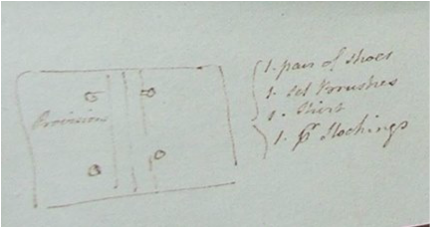
Sketch of a knapsack from a book which contains the Standing Orders of the 71st Regiment, 1778, located on the Isle of Canna in Scotland. This clearly shows a divided pack similar to the surviving 1790's packs such as the Isaac Royal House knapsack. (Thanks to Alexander John Good for the image)
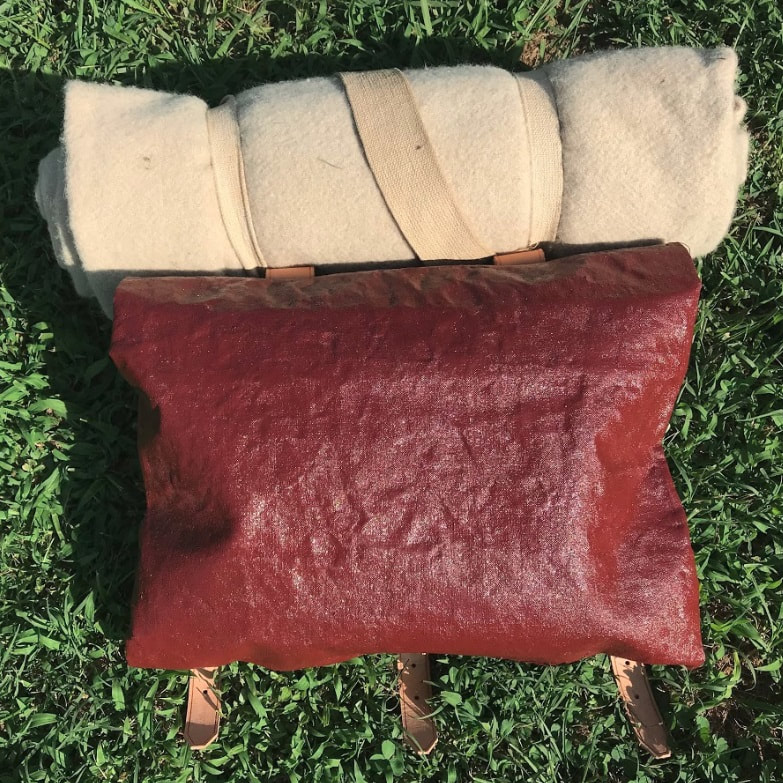
Front view of a reproduction knapsack. The exterior is painted with a linseed oil based paint which helps to waterproof the knapsack.
|
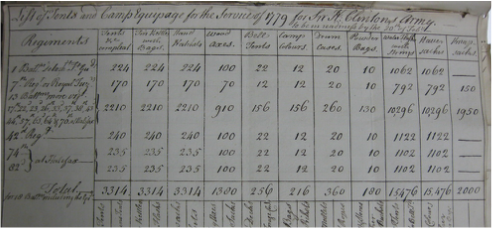
Invoice of camp equipment sent to America from England in 1779. Note the number of knapsacks sent. Knapsacks, along with items such as canteens, haversacks, tents and trousers were being provided at the Army level, rather than by individual regiments. It is most likely that less expensive painted linen packs are what is detailed here.
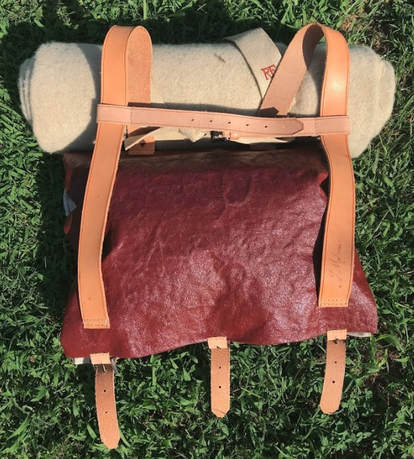
Back view of a reproduction knapsack. The blanket is attached with a blanket sling.
|
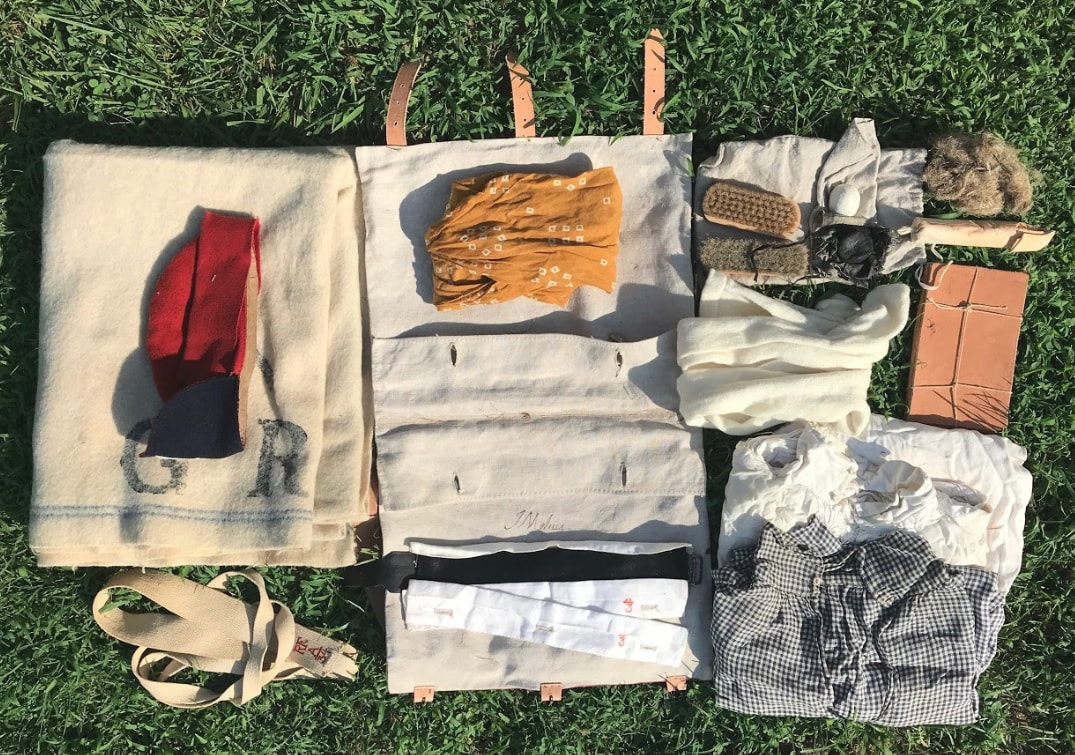
An open knapsack along with everything carried inside. (clockwise) Wool fatigue cap rests on the issued blanket, a privately purchased neckcloth on the open knapsack, brushes for cleaning an polishing leather, white ball, black ball, tow, brick dust, extra pair of stickings, shoe soles and heels, white linen shirt, blue and white check linen fatigue shirt, horsehair neckstock with clean false collar attached, 2 extra false collars, and a blanket sling.
